
明日之子
GT Voice: Chinese investment could help Germany stabilize its talent base_我的网站

A | NEW YORK -- On the 400th anniversary of Shakespeare's First Folio, rare originals are being displayed and publishers are offering collectors editions of Shakespeare's plays, including one that sells for $1,500.Scholars believe that between 200-300 copies still survive from the late 1623 release of “Mr. William Shakespeares Comedies, Histories & Tragedies." Presided over by two friends and former colleagues of Shakespeare, who had died in 1616, the Folio ensured that lasting texts existed for “Macbeth,” “Twelfth Night” and other cornerstones of Western literature. In Shakespeare's lifetime, many of his works were unpublished or available only in cheap paperback editions.“Without the First Folio we would have lost a world of words,” Gregory Doran, artistic director emeritus of the Royal Shakespeare Company, writes in the introduction to “The Complete Plays” of Shakespeare, a new publication.First folios have been on exhibit everywhere from the British Museum to the New York Public Library and at least two major book projects will mark the anniversary. The British Museum is collaborating with Rizzoli Books in New York on “Shakespeare’s First Folio: 400th Anniversary Facsimile Edition,” contained within a slipcase cover. With a list price of $150, the book is 928 pages and includes an introductory booklet co-written by Adrian Edwards, head curator of the British Library’s Printed Heritage Collections.The most ambitious, and exclusive project, is “The Complete Plays,” a limited edition from the Folio Society, an employee-owned company in London that puts out customized volumes ranging from "Beowulf" to George R.R. Martin's “A Song of Ice and Fire” series. The Society has printed just 1,000 copies of the 3-volume box set, with a list price of $1,500. Besides Doran's introduction, the Folio Society release includes a foreword by Dame Judi Dench. Each set is hand-numbered by illustrator Neil Packer.More than three-quarters of “The Complete Plays” have already sold, according to the publisher.“In an era when everything seems disposable, I feel like there's a good market for fine editions of classic books,” says Folio Society publishing director Tom Walker.The First Folio was daring, even audacious for its time, when such publications were “reserved for learned treatises, hefty genealogical texts, books of religious or historiographical importance, or even works by monarchs,” according to Shakespeare scholar Chris Laoutaris. Before Shakespeare the only playwright known to have been so honored was his contemporary Ben Jonson, who honored himself by overseeing “The Workes of Benjamin Jonson” in 1616. While the British Museum edition is relatively affordable, the Folio Society's production is closer to the intended market for the original release."Only those with deep pockets, and the space to read them, could afford such luxurious products," says Laoutaris, an associate professor at the Shakespeare Institute in the playwright's native Stratford-On-Avon and author of “Shakespeare’s Book: The Intertwined Lives Behind the Fist Folio,” which came out this year. “When it was released, the First Folio cost more to produce than any other collection of plays in history up until that point.”The Folio proved successful enough that an updated edition, the Second Folio, was published in 1632, a Third Folio in 1663 and a fourth in 1685. By the 19th century, the original Folio was becoming a valued piece of history, in part through the efforts of collectors Henry and Emily Folger, and a symbol of might for the British Empire. Sir George Grey, who had served as a colonial governor, established libraries worldwide that included copies of the First Folio.“For Grey, the First Folio represented the pinnacle of culture, but specifically English culture,” Laoutaris says. “He sought nothing less than the obliteration of the language and culture of the native populations in Australia, New Zealand and South Africa, nurturing a desire to replace these with the English language and its literary products." The United States is home to more than half of all existing copies of the First Folio, followed by the United Kingdom and Japan, with handfuls of editions also existing in Germany, France, South Africa, Australia and New Zealand among other countries. For antiquarians, the First Folio is the greatest of prizes: One sold for $9.9 million in 2020. For scholars and countless admirers, the Folio is secondary to the plays themselves."Shakespeare’s stature, for the past 400 years, is a reflection of his plays’ staying power on the stage far more than their survival in a collected works," says James Shapiro, a professor of English and comparative literature at Columbia University and author of several books on Shakespeare.“You can buy a Ben Jonson folio for a few thousand dollars; a Shakespeare folio will cost you millions. The reason for this simple: the remarkable afterlife of his comedies, histories, and tragedies in theaters throughout the world.”。
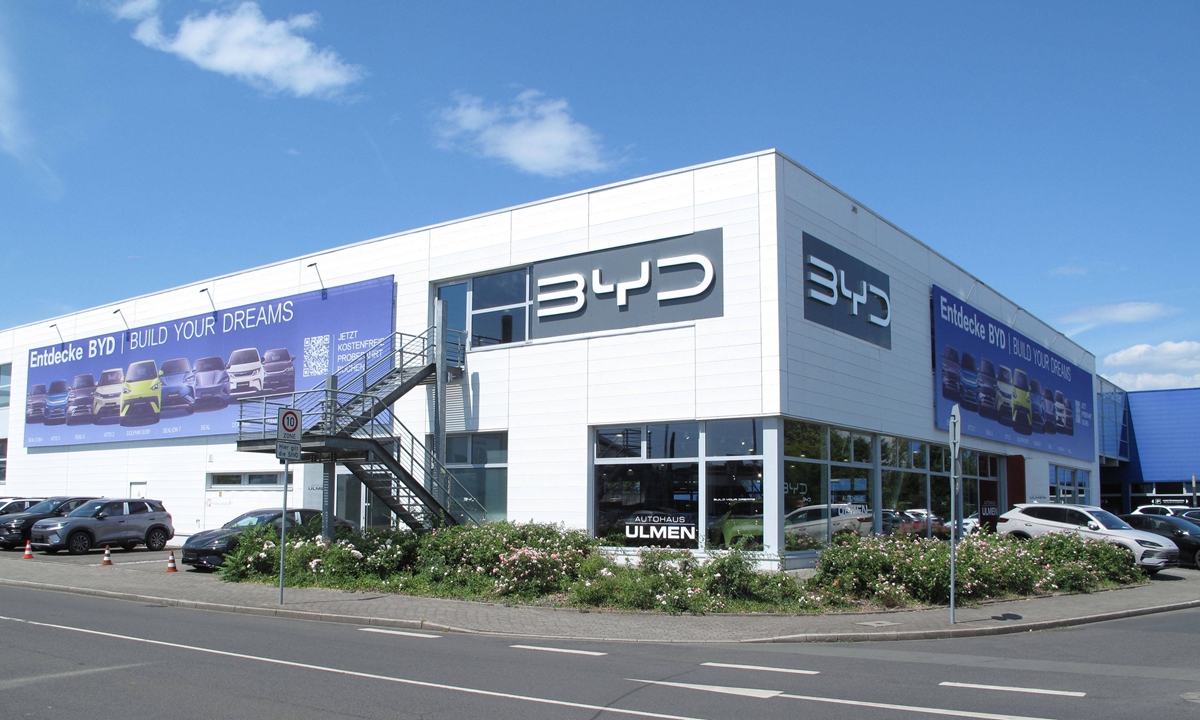
Germany's industrial woes have increasingly become a hot topic of discussion. The latest Engineer Monitor report from professional association Verein Deutscher Ingenieure and the German Economic Institute offers a new look at the issue.
The report showed that there were 58,392 unemployed individuals in the engineering and information technology (IT) professions in the fourth quarter of 2025, the highest level since the survey began in 2011.
Compared with the previous year, the number of unemployed increased by 16.7 percent, according to German media reports on Sunday.
These figures lay bare the challenges confronting the country's manufacturing sector. The reasons for the industrial woes are multiple. The soaring energy costs caused by geopolitical conflicts, the decline in exports caused by rising protectionism and low external demand, and the structural pain caused by industrial chain restructuring are all squeezing the space of German manufacturing.
Manufacturing is the backbone of Germany's economy, and engineers and IT specialists constitute the core force that sustains this pillar. For decades, the country's reputation for "Made in Germany" excellence was built on the expertise of these skilled professionals. Regardless of the macroeconomic ups and downs, preserving the stability and continuity of its industrial talent pool represents a strategic bottom line for Germany.
Should large numbers of highly skilled technical professionals leave the industry or sit idle, industrial research and development (R&D) and production cycles will be disrupted. Over the longer term, such a waste of human capital will erode Germany's industrial innovation capacity and, ultimately, undermine the foundations of its global competitiveness.
In this context, the urgent task for Germany is to create sufficient quality positions for its technical talent. Should it fail to do so in the short term, then Germany needs to embrace a more open‑minded development approach. Shoring up its manufacturing base cannot be achieved solely through protecting domestic companies; it also requires a significant expansion of effective investment to create enough high‑quality jobs that can attract and retain skilled talent.
This is exactly where China‑Germany cooperation could deliver tangible results. According to the FDI Report 2025 published by Germany Trade & Invest (GTAI), the total number of foreign investment projects in Germany fell 9.3 percent overall to 1,564 in 2025. Nonetheless, Chinese companies became the largest source of foreign investment projects in Germany in 2025, overtaking the US for the first time since 2017.
Chinese companies launched 228 investment projects in Germany in 2025, up 14.6 percent year-on-year. More than one in five Chinese investment projects involved production and R&D activities, above the overall average for foreign investment projects in Germany. This is a sign that Chinese firms are deepening their integration into the local industrial base, according to GTAI.
Observers noted the trend, pointing out that China is becoming an important force in driving German re‑industrialization. In industries where Germany urgently needs to rebuild its competitive edge, such as electric vehicles, batteries, energy technology, digital manufacturing, and automation, China is emerging as an increasingly significant complementary partner. In these critical areas that will determine industrial competitiveness in the coming decades, the relationship between China and Germany is not merely one of rivalry; there are clear and substantial complementarities. Germany still boasts world‑leading engineering expertise, precision manufacturing capabilities, and a strategic location at the heart of the European market.
China has complete and highly integrated supply chains for raw materials and intermediate goods and large capacity for increasing production. When Chinese automakers set up R&D centers in Germany, or when Chinese tech firms collaborate with German factories to build smart production lines, the beneficiaries are not only the Chinese companies but also the German engineers who would otherwise face redundancy.
Cross‑border investment cannot flourish without a sound policy environment. Chinese companies are apparently willing to develop in Germany, but it can only happen on the premise that the German side provides a fair, reasonable and predictable business environment, reduces non-market interference in commercial activities, and allows capital to operate in accordance with market rules.
If the two countries are able to reach a deeper level of cooperation in investment, many of Germany's trade‑related concerns may well find more pragmatic solutions. The deep integration of industrial value chains would facilitate two‑way trade, creating renewed momentum for German exports of machinery, vehicles, chemicals, and other competitive products to China.
。
Current article:http://59gdmiu.xiadiaosengchengcun.shop/hgi8/20260826/2557341.html
Published on:17:44:47
我的网站最近更新
- 【仓单】8月26日郑商所菜粕期货仓单较上一日下降1980张
- PriceSeek提醒:临汾古县炼焦煤竞拍价格上涨
- 消息称鸿蒙智行共光路舱内激光雷达能力基本等效于 192 线激光雷达
- 大普微:签订约34.91亿元企业级PCIe SSD销售订单
- 9月13日0时至23时 贵州毕节织金县新增58例无症状感染者
- 国家疾控局:做好“五一”假期及春夏季新冠病毒感染等重点传染病疫情防控工作
- 2026未来科学大奖获奖人名单揭晓
- 四川:受地震影响的泸石高速公路有序复工
- 官宣跳票 PICO Space Pro推迟至四季度 加入令人兴奋的全新功能
- 家门口装监控算侵犯邻居隐私吗?济南一法院这样解释:没越界,不侵权
- 奔驰松口2030电动化战略 将延长燃油车销售 燃油车与电动车共存
- 国际足联主席首次公开道歉
- 小米推出“米家石墨烯暖风机 C”:支持 1200W/2000W 两挡功率切换、10 分钟快速升温,179 元
- 강원도 산업용 전기요금 8% 인하…정부·한전 지역 요금제 공개
- 北京市益动京城筑梦见证团 “走进体彩”深度探访活动圆满收官
- Rajinikanth's Padayappa Re-Release Crosses Rs 12 Crore Collections Worldwide
- AUDI纯电车没有四个圈消费者还买账吗?上汽奥迪高管回应
- 财政部:10月将在香港举办APEC财长会,财政部:10月将在香港举办APEC财长会
- 布伦特原油期货跌幅扩大至1%
- 沙盘筑心伴成长 福彩公益暖童心——济宁福彩开展心理沙盘特色公益课
- 年尾,不是鱼尾
- 新华保险:上半年实现原保险保费收入1295.7亿元 同比增长6.9%
- 福州新区(长乐区):“五全”招商激活文旅新动能
- Microsoft Surface Laptop 1/2推出Windows 10固件更新:海量内容
我的网站热门资讯
- 巴拿马宣布进入紧急状态
- China urges U.S. to withdraw Section 232 tariffs on drones, parts
- 中超综合:海港“双杀”河北 广州三连败
- Photos: Australian Farmer Finds Almost 3-Meter Fragment of Alleged SpaceX Capsule on His Land
- वाराणसी में नाबालिग मां को चंद घंटे में अस्पताल से लौटाने की जांच करेगी चार सदस्यीय टीम, पुलिस ने बढ़ाई सुरक्षा
- 奥克兰一家餐厅被盗,损失达数万纽币,老板深受打击
- 耀皮玻璃:上半年净利润3396.6万元 同比下降60.67%
- 知らないと一生曲がり続ける!?ほとんどの人が知らない"本当に正しい構え方"を解説します!
- 多举措织密汛期安全“防护网”
- 国际足联将对阿根廷队展开纪律调查
- 真输不起?阿根廷球员赛后暴打西班牙球员
- 福建青年七夕交友方式“上新”
- 合同剩1年!名记:森林狼新老板应续约总裁康奈利
- 扶老人遭索赔双方在派出所协商两次,赔偿金额从10万降到1.9万
- United in Heart | Why is this entrepreneur from a century ago still remembered today?
- 活力中国调研行丨“批量造星”照进现实:价格打下来,速度提上去
- 马云:脱贫不是消灭穷人,而是消灭贫困。
- 提前9年押注、个人砸下10亿,中国版Moderna背后的神秘科技大佬,提前9年押注、个人砸下10亿,中国版Moderna背后的神秘科技大佬
- नालंदा में मंत्री और विधायक पर हमला... बॉडीगार्ड सहित कई लोग घायल, भागकर बचाई जान
- 从百花奖看国产电影创作趋势
- 火箭一夜4消息!范乔丹迎复出利好,谢泼德交易动向+19人名单出炉
- 长城调查丨“瓦特”携手“比特” 绿电直连还要跨过几道坎?
- 神态怪异,疑似嗑药!新加坡一男子公然在地铁上抽电子烟
- 永泰运在嘉兴成立新公司,注册资本500万